Stakeholder Perspectives on Whether and How Technology, AI and Robots Can Help for Mediation and Advocacy for Students with Disabilities
This project has been the primary focus of my first year as a PhD researcher, representing a collaboration between the Department of Computer Science and Technology and the Faculty of Education at the University of Cambridge. Throughout this year, I have conducted a comprehensive scoping review, carried out in-depth interviews, facilitated two focus groups, led a user study, and performed multimodal feature extraction to explore the potential of technology in supporting students with disabilities.
Project Overview
As of 2021-2022, 19% of UK students have disabilities. Despite existing university policies, such as those at the University of Cambridge, there remains significant room for improvement in supporting students who feel unheard or overwhelmed when navigating disability support systems. Power differentials within institutional structures may prevent some students from expressing their needs effectively or advocating for themselves with confidence.
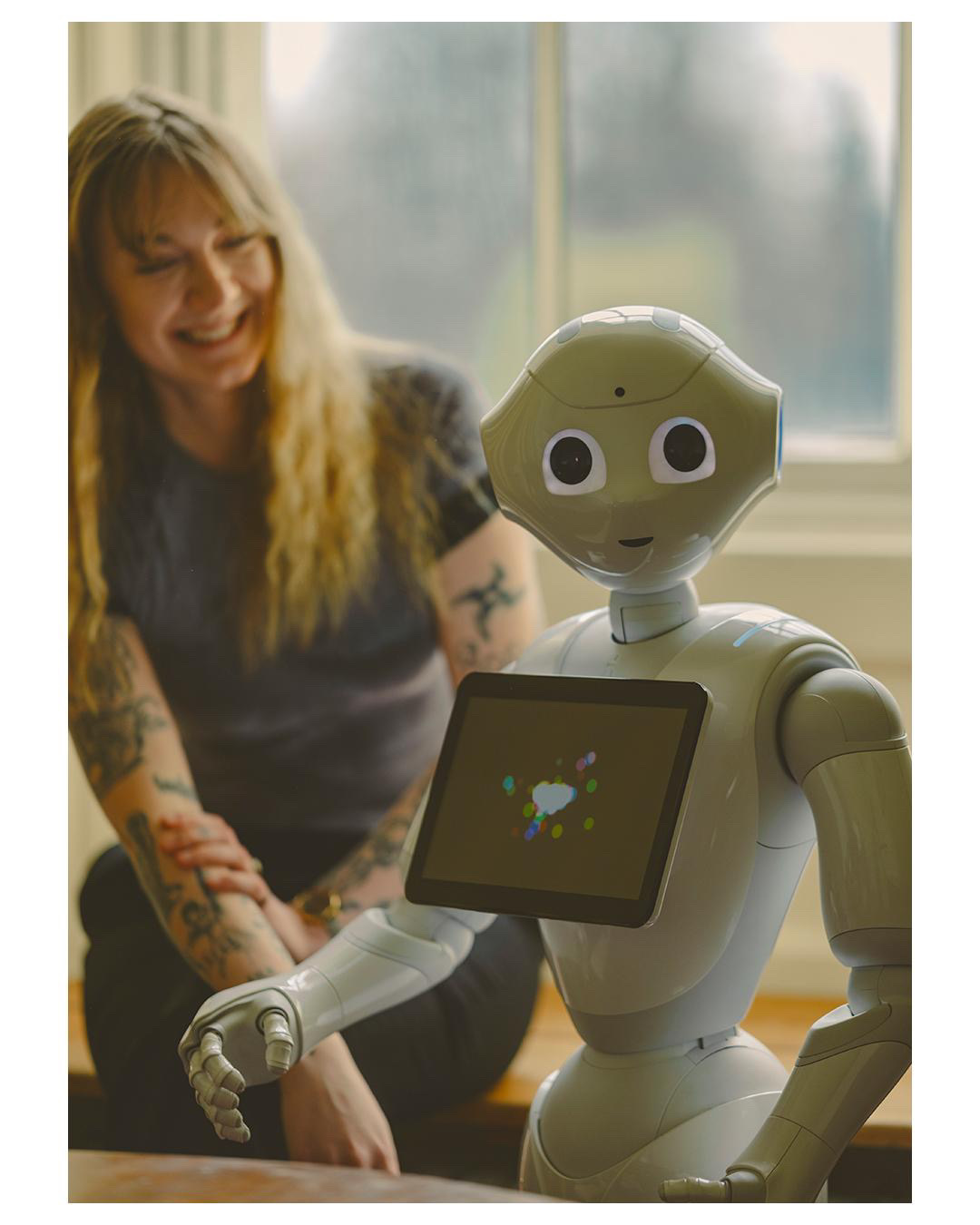
This project investigates stakeholders' perspectives on whether and how technology, artificial intelligence, and social robots could support mediation and advocacy for students with disabilities, with the potential to enhance inclusion, self-advocacy, and academic success. While human-led mediation and advocacy can be highly effective, these approaches are often resource-intensive and not always accessible when needed. Social robots present a promising complementary approach, leveraging artificial intelligence to provide communication support, facilitate self-expression, and offer consistent advocacy assistance.
As part of the project, we qualitatively assess—through interviews and focus groups with representative stakeholders including students with disabilities, disability practitioners, and academic staff—whether and how technology, AI, and social robots can meaningfully aid mediation and advocacy for students with disabilities in higher education settings.
Related Publications
- Markelius, A., Doğan, F. I., Bailey, J., Laban, G., Gibson, J. I., & Gunes, H. (2026). Social Robotics for Disabled Students: An Empirical Investigation of Embodiment, Roles and Interaction. Proceedings of ACM/IEEE Human Robot Interaction [Preprint]
- Markelius, A., Bailey, J., Gibson, J. L., & Gunes, H. (2025). Stakeholder Perspectives on Whether and How Social Robots Can Support Mediation and Advocacy for Higher Education Students with Disabilities. arXiv preprint arXiv:2503.16499 [arXiv]
- Markelius, A., & Gunes, H. (2025). Social Robotics and Large Language Models for Disability: A Scoping Review. PREPRINT, Research Square [DOI]